Why Prefabrication Improves Commercial Electrical Project Timelines
When managing a commercial construction project, time is one of your most valuable resources. Delays translate directly into increased labor costs, extended project timelines, and lost revenue opportunities. That's why commercial electrical prefabrication has become a strategic advantage for project managers and contractors seeking to stay on schedule while maintaining quality standards.
At Compass Electrical Solutions, we've seen firsthand how prefabrication transforms project execution in the St. Louis area. By assembling electrical components in a controlled off-site environment before installation, we help commercial clients compress timelines without compromising on safety or workmanship.

What Is Commercial Electrical Prefabrication?
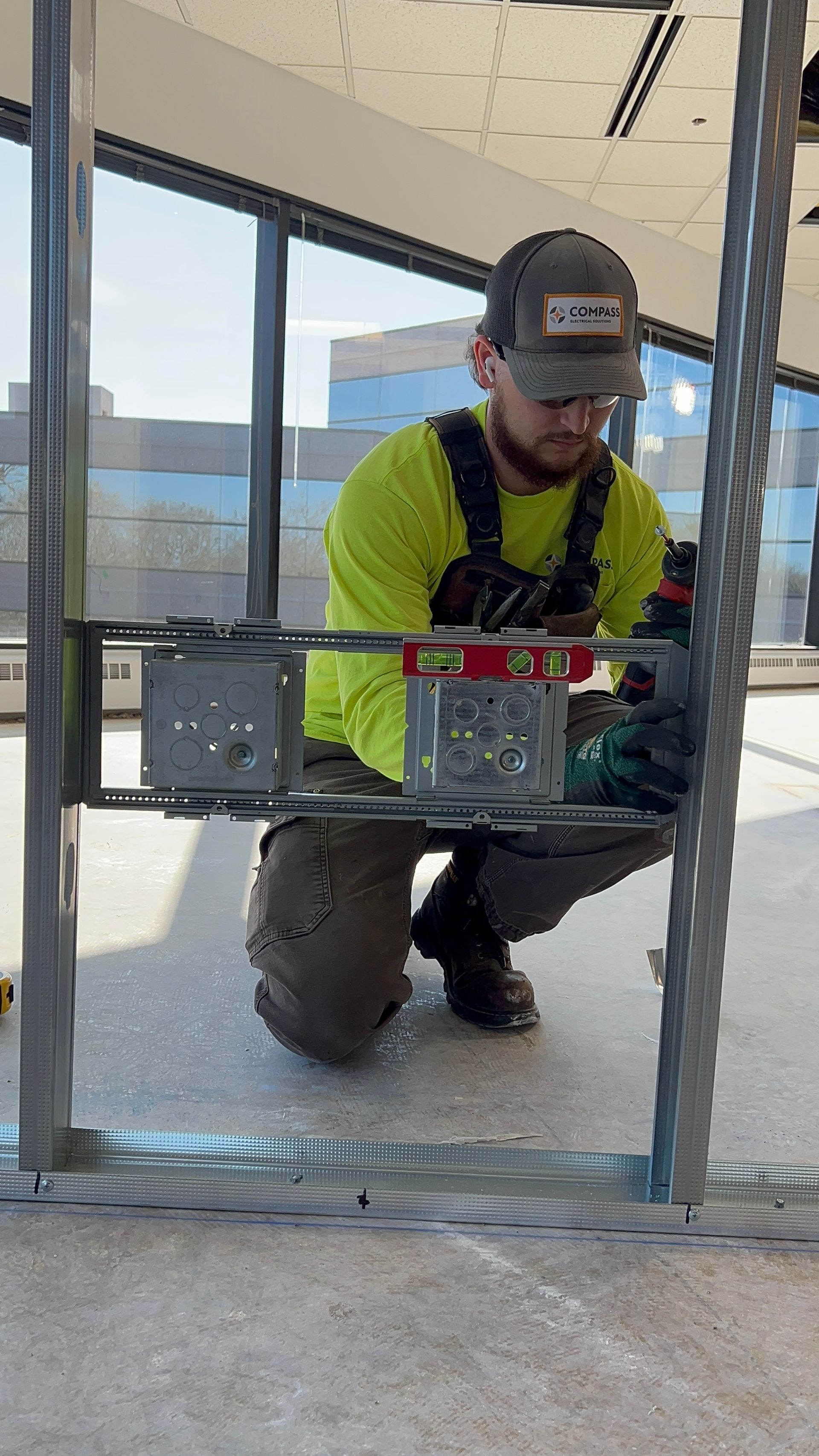
Commercial electrical wiring prefabrication involves building electrical assemblies, conduit runs, panel boards, wire bundles, junction boxes, and lighting packages, in a dedicated facility rather than on the construction site. These pre-assembled components are then transported to the project location, where they're installed as complete units.
Think of it as constructing pieces of a puzzle in advance. Instead of bending conduit, pulling wire, and assembling panels amid the chaos of an active job site, electricians arrive with ready-to-install components that simply need to be connected and energized.
How Prefabrication Accelerates Commercial Project Timelines
Parallel Work Streams
Traditional on-site electrical work follows a linear sequence: rough-in, inspections, finish work. With prefabrication, manufacturing can begin as soon as design documents are finalized, often weeks before the job site is ready for electrical installation.
While site preparation, concrete pours, and structural work proceed, prefabricated electrical assemblies are being built off-site. This parallel workflow compresses the overall project schedule by eliminating wait times between construction phases.
Reduced On-Site Labor Hours
Assembly work that might take days in the field can often be completed in hours at a prefab facility. Electricians work at benches with all necessary tools and materials within arm's reach, free from the interruptions common on busy construction sites.
For commercial projects with tight scheduling windows, this efficiency means fewer crew hours on-site and faster progression to the next construction phase. Fewer labor hours also translate to lower project costs, a welcome benefit when budgets are under scrutiny.
Fewer Weather and Site Delays
Outdoor construction is vulnerable to weather disruptions. Rain, extreme heat, and winter conditions can halt electrical work for days at a time. Prefabrication eliminates this vulnerability for a significant portion of the electrical scope.
Components are manufactured in climate-controlled facilities where weather is never a factor. When installation day arrives, crews spend far less time exposed to the elements, reducing the likelihood of weather-related schedule slips.
Minimized Trade Coordination Conflicts
Commercial job sites are busy places where multiple trades compete for space and access. Plumbers, HVAC technicians, electricians, and other contractors often need to work in the same areas, leading to coordination challenges and potential delays.
Prefabrication reduces the time electrical crews occupy shared spaces. With most assembly work completed off-site, on-site installation is faster and less disruptive to other trades. This improved coordination keeps the entire project moving forward smoothly.
Beyond Speed: Additional Benefits of Commercial Electrical Prefabrication
Enhanced Quality Control
In a controlled facility environment, quality standards are easier to maintain. Supervisors can inspect each assembly as it's built, catching errors before components leave the shop. This level of oversight is difficult to achieve on a sprawling construction site with multiple simultaneous activities.
Better quality control means fewer installation issues, reduced rework, and faster inspection approvals, all of which contribute to keeping projects on schedule.
Improved Job Site Safety
Construction sites present inherent risks, and electrical work carries its own safety considerations. Prefabrication moves a substantial portion of assembly work to a controlled facility with dedicated safety equipment and protocols.
Fewer hours on active job sites mean reduced exposure to fall hazards, moving equipment, and other construction risks. For commercial projects where safety metrics matter, prefabrication offers measurable improvements.
Material Efficiency
Prefabrication facilities operate with economies of scale. Material ordering is centralized, waste is minimized through precise cutting and assembly, and excess materials can be easily repurposed for other projects. This efficiency reduces both cost and environmental impact compared to traditional field installation methods.
When Does Prefabrication Make the Most Sense?
Not every commercial electrical project requires extensive prefabrication, but certain scenarios make it particularly advantageous:
- Large-scale commercial buildings with repetitive layouts benefit from assembly-line fabrication of identical electrical assemblies
- Fast-track construction schedules where parallel workflows are essential to meeting deadlines
- Projects with limited site access where space constraints make on-site assembly impractical
- Renovations in occupied buildings where minimizing disruption to tenants or operations is critical
- Multi-story construction where moving tools and materials between floors adds time and complexity
Prefabrication and Design Coordination
Successful prefabrication begins long before the first component is assembled. It requires detailed design coordination, accurate measurements, and clear communication between the electrical contractor, general contractor, and design team.
At Compass Electrical Solutions, we work closely with project stakeholders during the design phase to identify prefabrication opportunities. This early involvement ensures that assemblies are designed for efficient manufacturing and seamless installation, maximizing the timeline benefits prefabrication offers.
Bringing Prefabrication to Your Commercial Project
The construction industry continues to embrace prefabrication because the benefits are difficult to ignore. Faster installation, reduced labor costs, improved quality, and better safety outcomes make it a compelling choice for commercial projects of all sizes.
If you're planning a commercial electrical project in the St. Louis area and want to explore how prefabrication could compress your timeline and improve project outcomes, Compass Electrical Solutions brings the experience and facility resources to make it happen.See how we've delivered results for St. Louis clients on our featured projects page.
Contact us to discuss your project scope and learn how our prefabrication capabilities can help you meet your deadlines without compromise. Whether you're building a new commercial facility, renovating an existing space, or managing a complex multi-phase project, we're here to deliver practical, reliable electrical solutions that keep your project moving forward.
RECENT POSTS