The Role of Infrared Scanning in Preventing Industrial Electrical Failures
In an industrial facility, electrical problems rarely announce themselves politely. They build in the background, inside switchgear, behind panel covers, at terminations, breakers, bus connections, motor controls, and distribution points, until one day a nuisance trip turns into a shutdown, or a hot connection turns into smoke. That is why infrared electrical maintenance has become such a valuable tool for industrial operations that cannot afford surprises.
Infrared scanning gives maintenance teams a way to see what the eye cannot. By using thermal imaging and infrared thermography, electricians can identify abnormal heat before it becomes a full-blown problem. Instead of waiting for equipment failure, plant managers and facility leaders can act on evidence, schedule repairs, and protect both production and people.
For industrial facilities across the St. Louis region, this matters in a very practical way. Downtime is expensive. Emergency service is disruptive. And when electrical systems support production lines, HVAC, refrigeration, pumps, controls, or life-safety infrastructure, even a short interruption can ripple through the whole operation. Infrared inspection helps catch those issues while the system is still running and before costly electrical failures take hold.
Why Industrial Electrical Failures Are Often Heat-Related
Most serious electrical failures start with resistance. A loose lug, a worn breaker, deteriorating insulation, an overloaded circuit, or a corroded connection creates friction in the electrical path. That friction generates heat. Long before a component fails completely, it often leaves a thermal footprint.
That is the basic logic behind infrared testing. Electrical systems under load produce temperature variations that can be measured and compared. If one phase is significantly hotter than another, or one connection is hotter than surrounding electrical components, that difference may point to trouble. In many cases, the first visible symptom of a problem is not a spark or a shutdown. It is a hot spot.
Industrial environments make this even more important. Dust, vibration, moisture, age, heavy demand, and constant operation all put pressure on electrical equipment. A manufacturing plant may have electrical panels that look fine from the outside while hiding loose connections, faulty wiring, overloaded circuits, or overheating components inside. Infrared inspection gives maintenance teams a non-invasive way to detect heat patterns and identify risk before failures occur.
What Infrared Scanning Actually Does
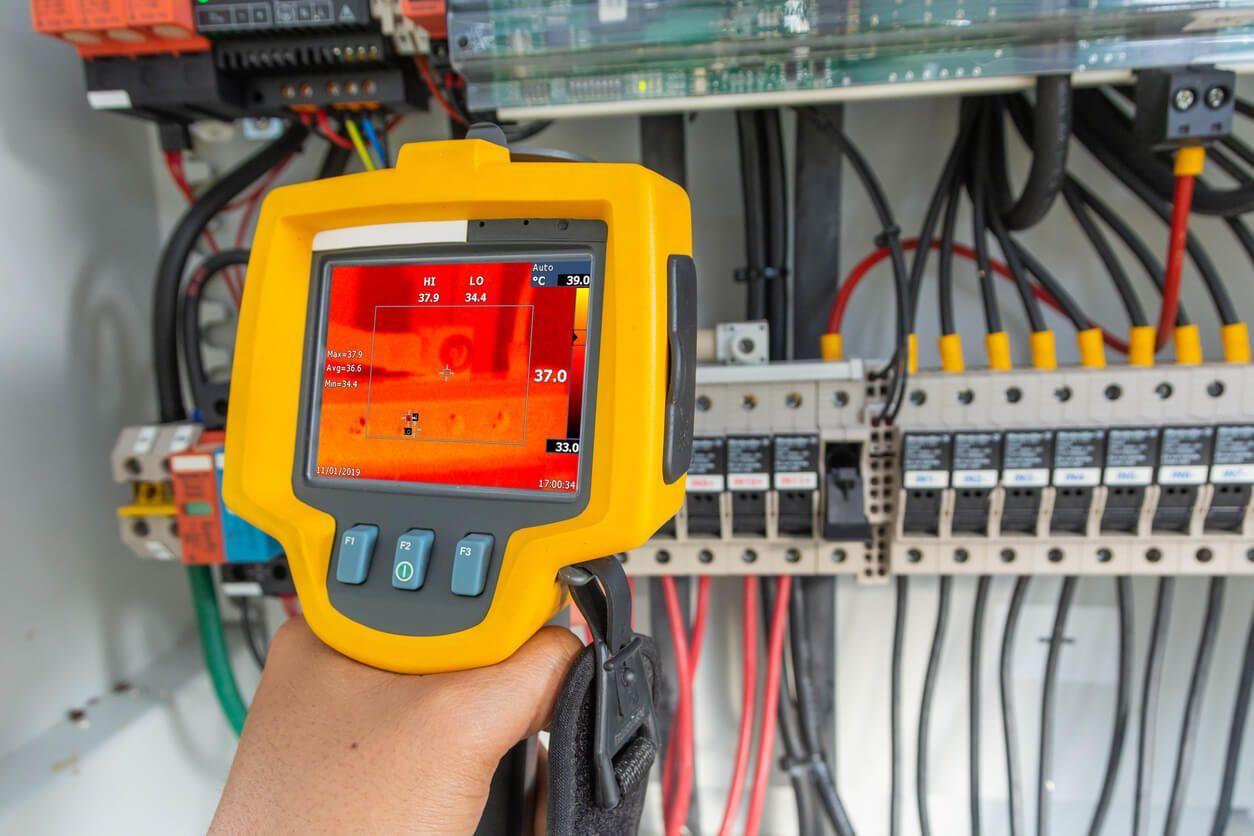
An infrared inspection uses specialized infrared cameras or thermal imaging cameras to detect infrared radiation emitted by energized equipment. Every object gives off heat. Infrared technology converts that heat into visual images that show surface temperatures and heat signatures across the equipment being inspected.
In practice, the process is straightforward but highly informative. A trained technician scans electrical panels, circuit breakers, disconnects, transformers, switchgear, motor control centers, bus ducts, and other electrical systems while they are operating under normal load. Because the equipment remains energized, the scan shows real-world thermal performance instead of a cold, disconnected snapshot.
This is one of the biggest key advantages of electrical infrared inspections. You are not guessing what might happen under production conditions. You are observing actual temperature differences while the system is doing its job. That makes early detection far more useful, especially in industrial settings where intermittent loads and changing demand can hide developing problems.
How Infrared Thermography Helps Spot Trouble Early
Infrared thermography is often described as a predictive maintenance tool, but that phrase can sound abstract until you see what it catches. A breaker feeding a process line may appear normal on a visual walk-through, yet thermal imaging may reveal one pole running much hotter than the others. A motor starter may still be operating, but infrared analysis may show abnormal heat signatures that suggest failing components. A panelboard may not have tripped, but heat patterns may point to poor connections or insulation breakdown.
This is where early detection earns its keep. Instead of reacting after the fact, maintenance teams can investigate the root cause, confirm the condition, and schedule repairs before production is interrupted. That shift, from reactive service to proactive maintenance, is where much of the savings comes from.
Infrared thermography also helps distinguish between normal warmth and true concern. Not every warm component is failing. Some equipment naturally runs hotter than adjacent parts. A qualified infrared inspection compares load conditions, component type, expected operating ranges, and temperature anomalies to determine whether the thermal image reflects a real issue. The goal is not to create alarm. It is to create clarity.
Common Issues Found During Electrical Infrared Inspections
Electrical infrared inspections regularly uncover problems that would otherwise remain hidden until they become expensive. Loose connections are one of the most common findings. A connection does not need to be completely disconnected to be dangerous; even a slightly loose termination can create abnormal heat, damage insulation, and increase the risk of electrical fire.
Loose or corroded connections are another frequent issue, especially in older industrial facilities or harsh operating environments. Corrosion increases resistance. Resistance increases heat. Over time, that heat can damage electrical components, weaken system integrity, and create safety hazards for personnel working nearby.
Infrared testing also helps identify overloaded circuits, circuit breakers with internal issues, faulty wiring, deteriorating insulation, and malfunctioning components. In some cases, the problem is load imbalance. In others, it is insulation breakdown or overheating components that are nearing the end of service life. These electrical faults do not always trigger immediate shutdowns, but they often lead to costly repairs and unplanned outages if ignored.
Another value of infrared thermography is its ability to reveal temperature anomalies across similar assets. When multiple disconnects or breakers serve similar loads, one unit running noticeably hotter can stand out like a single glowing coal in a pile of ash. That contrast makes infrared inspection especially effective in large industrial electrical systems.
The Connection Between Infrared Inspection and Predictive Maintenance
A good predictive maintenance strategy is built on evidence, not guesswork. Infrared inspection fits neatly into that approach because it reveals conditions that trend toward failure. It does not replace other testing methods, but it adds a layer of visibility that many maintenance programs need.
Predictive maintenance works best when facilities monitor equipment condition over time. Repeated infrared testing can show whether hot spots are stable, worsening, or resolved after repair. Thermal reports give maintenance teams documentation they can track, compare, and use to prioritize work. That makes budgeting and planning easier, especially when multiple assets compete for attention.
This is why integrating infrared inspections into broader maintenance programs makes sense. Instead of waiting for emergency repairs, plant managers can use infrared analysis to schedule repairs during planned downtime. That helps reduce downtime, avoids rushed labor, and lowers the chance of collateral damage to nearby equipment.
For many industrial facilities, the difference between predictive maintenance and reactive maintenance is the difference between a planned shutdown and a 2 a.m. phone call. One is controlled. The other is chaos.
Why Energized Inspections Matter in Industrial Environments
One of the major key advantages of using infrared inspection is that equipment remains energized during the scan. That matters because many electrical anomalies only show up when current is flowing and the system is under load. If you shut everything down first, the evidence can disappear.
Using infrared on energized equipment allows technicians to detect heat patterns tied to actual operating conditions. A weak connection in a feeder, for example, may only show abnormal heat during peak demand. A deteriorating breaker may only reveal temperature differences when a motor starts or a production line ramps up. Electrical infrared inspections capture those real-time conditions in a way that static testing cannot.
This also supports operational efficiency. Facilities do not have to dismantle half the building or halt production just to gather useful data. That does not mean every scan is zero-disruption, safe access and planning still matter, but it does mean infrared technology can often support proactive maintenance without causing the very interruption you are trying to avoid.
How Thermal Imaging Supports Safety and Reliability
Industrial electrical systems carry serious safety risks when hidden faults go unchecked. An overheating connection can escalate into arcing, damaged insulation, or an electrical fire. A failing breaker can compromise protection. A hot bus connection can threaten nearby equipment and personnel alike.
Thermal imaging helps enhance safety by identifying abnormal heat before visible damage occurs. It gives maintenance teams the chance to correct issues while the risk is still manageable. That is one of the most significant advantages of infrared thermography in industrial settings: it helps prevent costly electrical failures while also reducing exposure to safety hazards.
There is a reliability benefit as well. Equipment that runs hotter than intended often suffers faster wear. Excess heat shortens the life of insulation, weakens contact pressure, and contributes to premature equipment replacement. By identifying overheating conditions early, maintenance teams can protect overall system integrity and extend the useful life of electrical equipment.
In plain terms, heat is often the first crack in the windshield. You may still be driving, but the damage has started. Infrared inspection lets you catch the crack before the whole thing spiders out.
What a Typical Infrared Inspection Program Includes
A strong infrared inspection program is not just a technician with a camera walking through a plant. The best results come from a structured process that aligns with the facility’s operating profile, critical loads, and maintenance goals.
Typically, electrical infrared inspections focus on high-priority assets such as main service gear, distribution equipment, electrical panels, switchboards, motor control centers, transformers, disconnects, and circuit breakers. Depending on the site, the scan may also include UPS systems, backup power equipment, HVAC electrical systems, and process-related controls.
Inspection intervals vary based on the facility, risk tolerance, load profile, and equipment age. Some operations benefit from annual infrared testing. Others with heavy process demand, harsh environments, or mission-critical infrastructure may need more frequent inspection intervals. The right schedule should support preventive maintenance and preventative maintenance planning rather than serve as a box-checking exercise.
After the scan, technicians typically capture thermal images, document temperature anomalies, and provide thermal reports that identify priorities. Those findings help maintenance teams decide what needs immediate correction, what should be monitored, and what can be addressed during the next planned outage.
Integrating Infrared Inspections Into Maintenance Programs
Integrating infrared inspections into existing maintenance programs works best when the findings lead to action. A thermal image by itself does not solve anything. The value comes from interpretation, prioritization, and follow-through.
That means integrating infrared inspections with corrective work orders, shutdown planning, and other forms of electrical maintenance. If an infrared inspection reveals hot spots in electrical panels, the next step may be torque verification, connection repair, load balancing, breaker replacement, or deeper testing. If infrared thermography points to insulation breakdown or failing components, the facility may need targeted diagnostics before the condition worsens.
Maintenance teams also benefit when infrared testing is coordinated with other predictive maintenance efforts. Vibration analysis, power quality review, visual inspection, and load studies can all complement infrared analysis. Together, these tools create a fuller picture of system performance and help protect overall system integrity.
Most important, integrating infrared inspections helps facilities move toward proactive maintenance rather than a cycle of emergency repairs. That shift can reduce downtime, improve energy efficiency, and support more stable production.
The Business Case: Fewer Emergencies, Lower Costs, Better Uptime
Industrial leaders do not invest in infrared inspection because it sounds impressive. They invest because preventable failures are expensive. A single overheated connection can trigger downtime, damaged equipment, spoiled product, lost labor, and costly repairs that far exceed the cost of routine scanning.
Infrared testing helps prevent costly electrical failures by identifying issues before they become urgent. That means fewer emergency repairs, fewer unplanned outages, and fewer situations where a small maintenance item turns into a major interruption. It also helps maintenance teams schedule repairs on their terms instead of reacting under pressure.
There are energy benefits too. Electrical systems with poor connections, overloaded circuits, or overheating components do not operate as efficiently as they should. By correcting those issues, facilities may improve energy efficiency while also protecting thermal performance and reducing wear on connected assets.
The key benefits are practical: reduce downtime, avoid costly failures, improve safety, and support operational efficiency. In a busy industrial environment, those gains are not theoretical. They show up in uptime reports, maintenance budgets, and production schedules.
When to Schedule Infrared Testing
If a facility has experienced nuisance trips, unexplained heat, recurring breaker issues, or recent load changes, it is a good time to consider infrared testing. The same is true after expansions, equipment relocation, or major process modifications that place new demands on existing electrical systems.
Facilities should also consider electrical infrared inspections when equipment is aging, when maintenance records are incomplete, or when critical infrastructure cannot tolerate surprise failures. If your operation relies on continuous uptime, waiting until failures occur is usually the most expensive strategy available.
For many industrial sites, the smartest approach is to make infrared inspection part of a recurring predictive maintenance and preventative maintenance plan. That creates a baseline, helps spot trends, and gives maintenance teams the information they need to act before equipment failure disrupts operations.
A Smarter Way to Prevent Industrial Electrical Failures
Industrial electrical problems are often silent right up until they are not. They hide behind panel covers, inside breakers, along terminations, and across loaded connections. Infrared inspection brings those conditions into view by using infrared technology to detect abnormal heat, electrical anomalies, and developing faults while the system is still online.
That is the real role of infrared thermography in industrial facilities: not just finding heat, but creating time. Time to investigate. Time to schedule repairs. Time to avoid emergency repairs, reduce downtime, and prevent costly electrical failures before they spread across the plant.
For facilities in St. Louis and surrounding industrial markets, that kind of visibility can make the difference between a controlled maintenance decision and an unplanned shutdown. When electrical systems are central to your production, safety, and business continuity, infrared inspection is not just another test. It is one of the clearest windows you have into what your equipment is trying to tell you before it fails.
If your facility is looking for a more proactive approach to electrical maintenance, Compass Electrical Solutions can help evaluate your systems, identify risk areas, and support a maintenance strategy built around safety, reliability, and long-term performance.
RECENT POSTS